Starring:
- PowerPoint Pete – Loves strategy decks, despises technical details.
- Overengineering Oliver – Wants the best-of-the-best tool for every niche problem.
- Budget-Cutting Bob – Thinks IT should run on duct tape and hope.
- Pragmatic Paul – The rare voice of reason.
Scene: The Digital Transformation strategy war room
Pete stands in front of a 30-slide deck about “Modernizing the IT Landscape.” The title? “Best-in-Class Digital Experience: A Best-of-Breed Approach.”
Oliver is nodding aggressively. “Ex-aaaactly! We should get ToolX for DevOps, ToolY for HR, ToolZ for BI—they’re all the best at what they do! Forget those boring platforms; we need surgical precision here!”
Bob weighs in fast, holding his wallet like it’s his precious firstborn: “Why not just go back to Excel? That’s all we need, and…ahhhmmm….and we also need something to invoice.
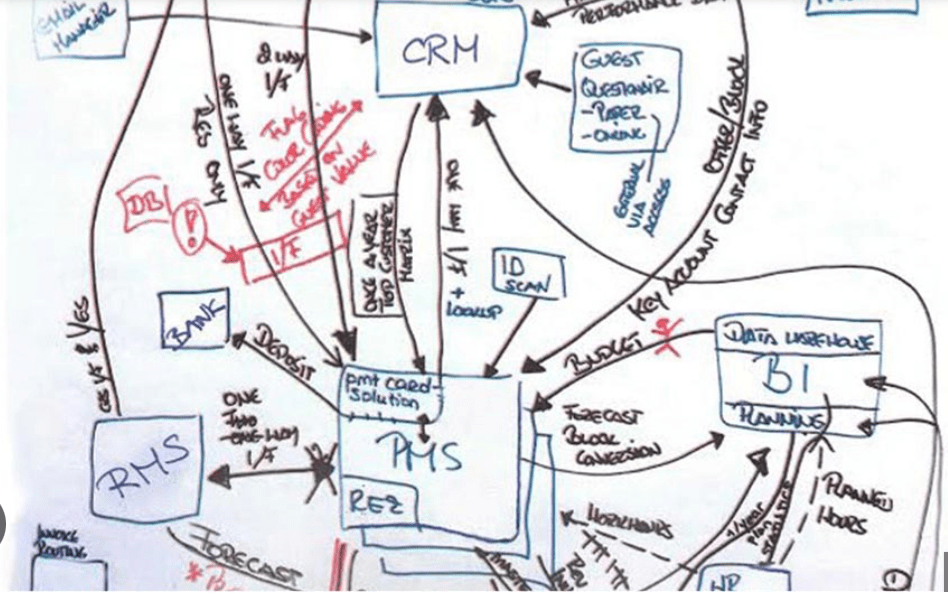
The Punk CIO sighs: “Guys, hold your horses! Do we really want to manage 17 integrations, 42 support contracts, and an IT team that spends more time on vendor calls than doing actual work?”
Platform/Ecosystem or best of breed?
I guess every CIO faces the same dilemma: do we go all-in on a single (OK, low number of) platform/ecosystem, or do we pick the “best tool for the job” every time we are faced with some requirements?
Here’s my simple take on this: Too many niche applications will burn your IT team alive. So…
Why platforms win (at least most of the time)
- Lower Integration Costs – Every extra tool means more APIs. Well, I know we have our state-of-the-art ESB that was supposed to enable integrations for pennies, but still :-).
- Easier Maintenance – Fewer vendors, fewer headaches, fewer support contracts.
- Security & Compliance – One unified system is easier to get through compliance and security reviews, but also easier to protect going forward than 20 fragmented ones.
- Better User Experience – Seamless workflows, one login, one UI to learn for your user community.
- Scalability – Big ecosystems (Microsoft, Salesforce, SAP, ServiceNow, you name it) constantly evolve and improve.
That’s what I call some good reasons, Dear Business People, why we in most cases force standardization — not because we love mediocrity :D. It’s because we hate chaos and our pockets also do.
OK, I have to admit that in some cases, your use-case is truly special, so
When niche tools are actually worth the pain?
- You’re in a highly specialized industry
- It’s a true competitive differentiator – The tool gives you a strategic edge, not just minor efficiency gains or the so-called fancy factor.
- Off-the-shelf doesn’t cut it – No platform can do what you need at the required level, but before you rush to niche, see 2.) once again.
- You have the resources to integrate & maintain it properly – Because if you don’t, it will rot and causing you endless nightmares to recall who was the last one, who knew someone that knows the system.
The Punk CIO take
- Most business stakeholders overestimate how “special” they are. They think they really need niche tools when a standard one would do just fine.
- The perfect tool isn’t perfect if it wrecks your ecosystem. The cost of complexity often outweighs the benefits.
- Standardize first, specialize only when it truly moves the needle. And if you go niche, integrate it properly.
At the end of the day, your IT stack should be a strategic enabler, not an expensive mess. Choose wisely.
 Behind the Firewall: Notes of a Punk CIO
Your turn—what’s on your mind?